Sunday, August 24, 2008

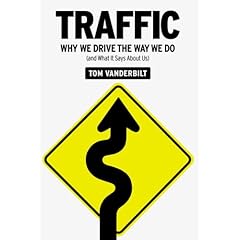
TRAFFIC: WHY WE DRIVE THE WAY WE DO (AND WHAT IT SAYS ABOUT US) by Tom Vanderbilt


"You're a bad driver." In America, a nation built on Automobile Culture, it's hard to find a accusation that provokes more heated defenses that that one. The subtitle of this book is "Why We Drive the Way We Do (and What It Says About Us)," and, by the time Tom's through with you, he's hoping to convince you that it says a WHOLE lot about you--something I think many people suspect, which is why the issue can get thorny. "A messy desk means a messy mind" they used to say, prompting a new question: Does being a bad driver make you a bad person?


If the answer is yes, we apparently have a problem, because Tom throws a library's worth of data and anecdotes on you in a seeming attempt to prove that most Americans are, in fact, terrible drivers. We talk on our cell phones, read our papers, work on our laptops, drink our coffee, and fiddle with our MP3 players while navigating toll plazas. After a mere 30 seconds of waiting to make a left through traffic (after Tom's many subtle polemics about the problems of left turns, I started to wonder whether he was advocating an all-right-turn America), we get antsy and start to think about cutting in front of that tractor trailor coming at us at 70 mph.


That is, if we perceive it--it turns out we're terrible at judging distance and speed. Humans can only run, at most, 20 mph, so doing 60 mph in a careening deathmobile called a car isn't exactly recommended in our evolutionary instruction manual. We also tend to hit a lot of bicyclists. And little children. And "stationary objects." Believe it or not, "single-car" crashes (read: driver sees UFO while driving down I-80 and swerves off the road, striking a speed limit sign) are the most common type of accident. In other words, not only do we crash a lot, but we also have dorky crashes--forget Lethal Weapon. And, by the way, "studies" tend to show that people do "live as they drive," which promotes the policy of insurance companies looking at credit scores when determining rates, on the basis that people who are riskier with credit will be riskier drivers. More on why you should probably be suspicious of these "studies" translating into policy later.


The information is packed tightly together: Tom brings in evolutionary biology, the dynamics of insect traffic management (ants are the undisputed kings), and neo-Freudian psychology to explain how and why we humans behave the way we do in traffic. Why do more roads create more traffic? Are divorcees more likely to have accidents? And, of coure, how in God's name does the city of Los Angeles manage its famously suicidal traffic situation? If you're a researcher, the notes are a real treasure trove of information; basically, the research has already been done for you, so find a new job. Tom interviews New York City traffic commissioners, Los Angeles ATSAC managers, and European traffic engineers, coming up with a wide range of opinions and statistics in nine medium-sized chapters. Much of it is fascinating: He introduces Hans Monderman, a European traffic engineer who advocates turning "village" roads into more pedestrian-friendly places (a nod to the "New Urbanism" movement).


Tom also presents a fairly convincing case for congestion pricing in America, although I still disagreed. He points out that "hotels charge more for in-season rooms, railways and airlines charge more for peak travel periods, and telephone companies charge more during the times when more people are likely to call--why should roads not cost more when more people want to use them?" As a capitalist, I was tempted to support this argument, except for one problem: Hotel rooms, airlines, and even long-distance telephone calling are luxuries; roads, at least in America, no longer are. Our infrastructure is built around them, and besides being wildly inefficient as anything controlled by the government would be, congestion pricing could also derail productivity. Still, the fact that he made me consider it is a considerable compliment to him.


Far into the grimy alleyways of this book, around page 253, Tom throws in a sentence that should be front and center, in the prologue: "statistics are one of the most dangerous things about traffic." The sentiment is taken out of context here--it's mentioned in relation to a discussion on rear-end crashes--but a book that relies as much on statistics as this should probably acknowledge it more openly. Unless your cynicism glands are malfunctioning, you'll probably start to tire of every sentence beginning with "studies have shown..." or "researchers in Sweden have found..." or "psychologists have discovered...". Maybe the studies are valid--after all, it did make intuitive sense that traffic fatalities tend to decrease as GDP per capita increases, and that roundabouts are actually safer than conventional intersections (because people are less certain of what to do, they tend to drive more cautiously). But after "studies" have "shown" that power lines cause cancer, BPA is the doomsday chemical for all human infants, and all white people are "racist," I was highly skeptical of these results on a scientific level. Although Tom provides an extradordinarily detailed bibliography explaining exactly where he got his information (papers with names like "The Perception and Cognition of Environmental Distance: Direct Sources of Information"), I started to suspect that he only questioned the "studies" that conflicted with his own personal opinions, which, to be fair, he valiently tried to keep out of the narrative. "Studies" bashing SUVs were prevalent, as were "psychological theories" about everything from BAC levels (they're not set low enough) to how drivers perceive bicyclists. I would caution the reader to be skeptical: Were these "studies" conducted fairly and without bias? Did they include stringent operational definitions of all involved concepts? Were they double-blind? Of course, it's impossible to wade through the astonishing amount of information Tom provides, both in the text and in the notes, so a general aura of suspicion should rule the day.


A couple of other problems: For math-a-phobics, the narrative sometimes tends to read like a physics book. He describes scenarios in specific velocity-speed terms that occasionally become a little heavy if you're expecting a quick read. If you're willing to follow it, the results can be worthwhile. Also, Tom goes a little easy on pedestrians, sometimes making them out to be helpless victims in a massive conspiracy of car drivers to flatten them in the nation's intersections. While, statistically, it may seem like drivers are trying to do just that, the fact remains that some pedestrians (e.g. the ones who walk against traffic signals, and the ones who do their makeup as they jaywalk across city streets) make their own beds. Cars have rights, too, Tom!


Still, don't let these things bother you too much: Just keep an open mind and you'll learn things you never suspected about all the hundreds of "sub-skills" you activate when making your (on average) 1.1 hours of commute per day. Tom's tone is conversational, and he tries to be nice when he suggests that you get a little more "feedback" on your driving before deciding you're a pro at it. And the environmental impact of cars? I couldn't have agreed more with Tom's sentiment in the epilogue: "It will be easier to remove the internal-combustion engine from the car than it will to remove the driver."


The real question is, of course, left open in the end: What will the future of transportation look like? The next few years should be interesting. For now, though, climb in the driver's seat at your own risk: It's a scary road out there.


RECOMMENDED


Wednesday, August 13, 2008

ATOMIC KITCHEN: GADGETS AND INVENTIONS FOR YESTERDAY'S COOK by Brian S. Alexander


"In one sense, the term 'atomic kitchen' is a fun way of describing a streamlined, labor-saving, 1950s super kitchen, offering the ultimate in Space Age modern convenience, ease, and beauty," Alexander says. "But it's also a term appropriate for its time--one that illustrates the optimism that housewives held for the future." Indeed, paging through this book, with three very short chapters and a huge bulk of 1950s gizmo ads and appliances, some of that post-War optimism rubs off. Brian dug through the bowels of the 1950s advertising world and unearthed hundreds of those suburban paradises that defined a generation: lipsticked, smiling women with pointy red nails beaming almost orgasmically in front of their new "Kelvinator 'Automatic Cook' Electric Range" or their Servel Ice Cube maker.


Alexander generally steps out of the way of the old ads, contributing only a few pages of text to what's largely a picture book with captions. In the Fifties, he says correctly, the Atomic Kitchen wasn't a laughable metaphor at all; Scientific American was giddy about the future of atomic-powered devices, and these gadgets making it into kitchens seemed "just around the corner." From the "Can-O-Mat" to "Decorator Refrigerator" (possibly one of the first LSD-inspired ideas, consisting of matching, say, your plaid curtains with a plaid refrigerator), the future looked both high-tech and high-fashion.


Because the decade's advertisements are probably its most iconic feature, often imitated for satirical purposes, it's impossible not to shake your head and laugh when you read an ad pushing an "all-steel" kitchen that "brightens her eyes...because it's beautiful" and "lightens her heart...because it lightens her housework." Or an ad for a refrigerator that "practically hands you the food." Clearly, some things caught on (electric mixers, individual ice cube makers) and some things didn't (eye-level, cabinet-style refrigerators, spaghetti forks), and some things probably should have (a nifty "sandwich pie" maker that toasted the contents of a sandwich over the stove). Anyone who spent time in the kitchen in the Fifties is bound to find something (maybe with some embarrassment) that graced their cupboards proudly back then.


The most interesting part of the book, though, was Alexander's examples of variations on "Kitchen of Tomorrow" displays that were popular at the time. The "House of Tomorrow" featured at the 1933 Chicago Century of Progess Exposition inspired a strange kind of sadness, a sort of failure to live up to expectations: it was 12-faced and still looks futuristic, with a personal airplane hangar where the garage still, unfortunately, is today. General Electric's "Kitchen of Tomorrow" foresaw TVs and air purifyers creeping into the kitchen, but also predicted automatic floor cleaners and a control station that would monitor temperature levels and food stock, for instance, features that have yet to come true or whose functions are outdated. These sorts of features make this book a great coffee-table book, something to pick up and page through every once in a while for kicks and giggles or party entertainment.


That said, Alexander never quite addresses the key question: What became of the Atomic Kitchen? He acknowledges that fashions changed: fruity decorations and shiny "magic" gadgets gave way to smooth lines and earth-tone colors. But that's not it at all. Although these ads are hilarious and even pathetic to observe today, they were truly inspirational to department store owners and consumers alike in their heyday; basically, these things were SERIOUS in the Fifties--these pieces of colorful, exaggerated marketing paraphenalia made General Electric's, Servel's, Tupperware's, and many other companies' fortunes. They moved merchandise. Because once, in the euphoria of post-War economic prosperity and optimism, when people looked at the shiny, perfect kitchen and the flawless, pacified women, they held a tremendous quantity of hope: "Someday, somehow, that woman could be ME!"


What changed wasn't only the designs; what changed was people's attitudes. In the Sixties, when the bitter Baby Boomers hijacked public opinion, the optimism soured, and suddenly, these sorts of ads inspired quite a different sentiment: "This is a LIE"; "These women aren't real"; "This isn't how people live"; and, later, "All these women are WHITE." The Great American Pessimism was born, and every generation since had varying degrees of it rubbed off on them. The Atomic Kitchen was burned down by the fires of the 1968 DNC, firehosed with the civil rights protestors in the South, detonated with the bombs of Vietnam. Technological advancement continued, of course, at a rapidfire pace, but the milieu changed, and advertising changed with it.


Still, even with all these changes, the American yearning for a touch of magic to accompany technology lives on. Jackson Lears, a commentator on the American Experience, has said that "the recurring motif in the cultural history of American advertising could be characterized as the attempt to conjure up the magic of self transformation through purchase while at the same time containing the subversive implications of a successful trick." Basically, Americans want some soul with their progress. They don't only want a dishwasher that will wash the most dishes in the fastest amount of time; they want a dishwasher that will do all that AND make them feel like good people. Rob Walker, in the last book, Buying In, talks about selling an idea along with a product, and although the media has changed, some of that "self transformation" implied in the Fifties "Kelvinator Kitchen" ads survives in marketing in the millenium.


And who knows? Maybe the optimism, at long last, was warranted. Maybe Atomic Kitchen itself will become the object of parody in the future as atomic-enabled citizens page through this turn-of-the-twenty-first-century book, marvelling at the lack of foresight during our own "modern" era.
Some things never change


RECOMMENDED


Saturday, August 9, 2008

BUYING IN: THE SECRET DIALOGUE OF WHAT WE BUY AND WHO WE ARE by Rob Walker

Often, the hardest jobs in the world are ones that involve stating the obvious. Or, rather, stating what amounts to "the obvious" for 90% of the population to the 10% of the population for whom the information is worth $15,000. And then, of course, getting them to believe it. In Buying In, Rob Walker screams, smoke signals, and signs the latest version of "the obvious": Generation Y is NOT immune to marketing. The "consumer revolution" is, basically, a term futurists use to garner checks from the likes of Proctor & Gamble (after all its mentions in this book, I was wondering if Rob got an endorsement from them, a stunt that would be oddly appropriate for a book that seeks to explain underground marketing techniques). The consumer is not in charge; the inmates are still quietly resting in the asylum. In fact, as Rob implies, the inmates have more in common with the Big Nurse itself than with any sort of "selling out" Gen X quasi-rebellious anti-consumerist attitudes.


Rob starts by explaining "The Desire Code," best defined as a rough formula for why we buy the things we buy (and if you're thinking things like price, quality, etc., prepare for reeducation). The problem, Walker says, is "the Pretty Good Problem." Basically, Oscar Mayer and Miller sell the exact same product: hot dogs. By now, thanks to the Food and Drug Administration, you can be pretty darned sure there isn't rat feces (at least in industrial amounts), uncleaned fish entrails, or bull semen getting stirred into the mix a la The Jungle. They're both just meat in a bun; they are both "pretty good." So, how do you choose? Herein lies "The Desire Code," in a process that involves highly complex personal narratives we have with ourselves, including the constant struggle to reconcile our individuality with a sense of community. Symbols (often in the form of brands), he assures us, help us to create that identity: Apple=nonconformist (for most people), for example, and Apple fans will pay more for "their brand" even if a cheaper knockoff is more practical. Most of this first section is common sense to that 90% of the population. The second section, however, may come as something of a shock.


The problem, really, Rob tell us, isn't that Generation Y (AKA "the youth") see through traditional advertising; the problem is that EVERYBODY sees through traditional advertising, if they take the time to look at it for that long. In the era of "the click" and TiVo, you truly are in control of the advertising you see. If the free market was a democracy, you would vote with your remotes, and often do. TV is still, as Rob quotes, " 'a selling machine in every living room' " but you have space-age control over the machine now. A tiny little button called "mute" nullifes the billions of dollars a company like, say, Anheuser-Busch spent hiring tanned, ripped models to dance with bikini-clad women as they clutch cans of its beer. What is needed, proverbially, are ways of advertising that "can't be TiVo'd out." And that's where Rob introduces the nexus of the book, the future (and, arguably, present) of marketing, consisting of a variety of sly little methods he calls "murketing."


A mix between "murky" and "marketing," this new technique involves things like Red Bull underwriting an underground competition between a few guys on kiteboards trying to get to Cuba. It wasn't announced, and no one from Red Bull was there, but that wasn't the point. The point is that consumers respond to brands with vague, "murky" meanings, "filling in the blanks" to fit their own personal narratives. "The truth," Rob says, "is that any Red Bull drinkers, or potential drinkers, who might be impressed by the Cuba crossing are going to get exactly the message Red Bull wants them to get. People who are receptive to the idea that Red Bull's involvement makes the drink cool will decide that without additional prompting. Other Red Bull fans will never hear about it or just shrug when they do and dream up some other, murky reason to buy the next can." Murketing, in so many words, is essentially marketing in self-denial. Sponsoring bike polo games for editors and patrons of underground "zines" and, to use a more prominent example, putting brands in TV shows (otherwise known as "product placement"--think Reese's Pieces in E.T.) are murketing at its finest.


This underground non-marketing "murketing" pales in comparison to the most shocking chapter in the entire narrative: "the commercialization of chitchat." It details a marketing ("murketing"?) company called BzzAgent. Go ahead to their website right now, and you can sign up to become, of course, a BzzAgent. Anyone can do it; you don't get paid, but you can collect rewards. Rewards for what? For adopting the product of BzzAgent's latest client, and working it into casual conversation with your unsuspecting friends. An official BzzAgent's guide recommends ways to "buzz" a product: call up bookstores and casually mention that you're looking for the product you're "campaigning" for, leave little notes about a new brand of eyeliner around back room tables at work where your co-workers will see them, or, in an example that Rob cites, take Al Fresco chicken sausages to your July Fourth cookout, throw them on the grill, and tell all your friends and relatives how tasty, juicy, and fat-free they are. The "agents" then file reports, relating how their friends, neighbors, and, often, acquaintences reacted to the new product.


The entire scenario was terrifyingly close to the dystopian young adult novel Feed by M.T. Anderson, when the teenagers of the future all have product feeds wired into their brains (by choice--in fact, feeds are a "luxury" similar to a cell phone today), and advertising agencies that can monitor their conversations (to make them a "consumer profile" based on their words and actions and suggest relevant products for them) run hauntingly similar campaigns. In one scene, Coke says it will give out free prizes to whoever says the word "Coke" most during his or her everyday conversations, and the teens get together at parties and say the word "Coke" over and over again, vowing to win the money and split the prize. It seems relatively harmless, which is what makes it so scary, because, ultimately, it ISN'T harmless; a world where advertisers are co-opting our conversations isn't a world I ever hope to see.


And Generation Y, that hard-to-market-to Generation, is not only willing to participate in these sorts of campaigns, it's CHOMPING AT THE BIT to participate. Because for Generation Y, there's nothing wrong with branding at all; it's a fact of life. They accept it, and, more poignantly, they're willing to co-opt it for their own artistic and, of course, financial purposes. For better or for worse? The reality is complicated, and, ultimately, you have to decide.


Finally, the last section focuses on consumer ethics, and I was pleasantly surprised by how non-preachy this was. I was expecting Rob, who DOES write a column for the New York Times Magazine, a left-leaning publication, to add to the already massive cloud of smug accumulating around liberal centers and soapbox me about how evil I am to not know where my black one-piece bathing suit I'm wearing right now came from, and don't you care that there are (nameless, faceless, abstract) Chinese children laboring in sweatshops, you horrible, horrible person? But he didn't. One of the main focuses of the section is how IMPRACTICAL "eco" products really are. It will always be a "niche" market. Why not have a quietly green product that will attract a larger consumer base? Rob quotes American Apparel CEO Dov Charney, who lays it on the line: " 'That's the problem with the antisweatshop movement. You're not going to get customers walking into stores by asking for mercy and gratitude. If you want to sell something, ethical or otherwise, appeal to people's self-interest.' " No neo-communism, no lifestyle-scolding, and, THANK GOD, no Al Gore. Walker really boosted his business creds by doing what a business writer should: Sticking to business.


As a member of Generation Y, none of this surprised me, and instead of looking down on my Generation for embracing new forms of advertising, I commend it. Maurice Chevalier once said, "I prefer old age to the alternative," the alternative being, obviously, death. Similarly, I hereby prefer advertising to the alternative: socialism. There was no marketing business, no futurists, no Proctor & Gamble, no BzzAgents in the Soviet Union, and that wasn't incidental; in fact, that was pretty much the problem. Maybe some "murketing" techniques do go too far, and maybe we don't always (or even usually) buy things for the right reasons. But the copious amounts of advertisements flickering through your attention every day, on the sides of blogs, in well-stocked supermarkets, and fifteen minutes an hour on television, while annoying, are collectively an advertisement in themselves, for a super-abundant United States of America. Perhaps it's slightly redundant (and open to satire) for you to have a choice between Dove, Caress, and Neutrogena soap when you're essentially choosing between different color packaging on the same product, but I'll take that ridiculous choice over block-long lines for one decidedly inferior loaf of bread.


Thankfully, this wasn't another "free market capitalism is evil" book (always hypocritical, since books sell on the open market). Rob was surprisingly thorough and fair, critiquing advertising (often cynically) when it was due and praising it, and the new Generation Y entrepreneurs imitating and co-opting it, when appropriate. While the information by itself is entertaining, with various anecdotes about bizarre marketing techniques to neuroscience studies, it helps immensely that Walker has a sharp wit and an effective literary voice to explain it all. Marketing, Rob says, keeping in his role of Stating The Obvious, is not going anywhere soon. It's changing, becoming more effective, and Generation Y is the first generation that is truly learning, in the spirit of "if you can't fight 'em, join 'em," to reap individual benefits from it. "Evil corporations"? Walker reminds us that Time's "Person of the Year" in 2006 was YOU, and, during the "era of the click," consumers are truly increasingly responsible for the kinds of advertising in which they participate.


Stop blaming the companies, and start looking at your own behavior, Walker implies smartly. Because, no matter what radical changes have occured in the shift from "marketing" to "murketing," YOU still have the fundamental power of consumers throughout US history, the power that all the "evil corporations" fear the most: the power to "not buy."


Use it or lose it.


HIGHLY RECOMMENDED

Wednesday, August 6, 2008

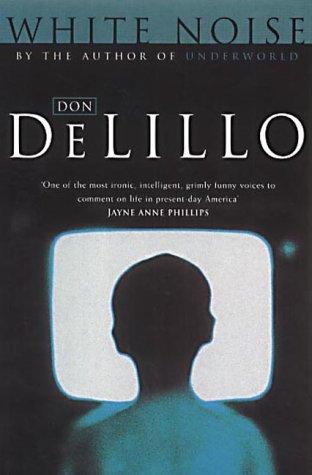
WHITE NOISE by Don DeLillo


[Cue Rod Serling]. Meet: Jack Gladney. Age: No longer young. Jack is a professor at a university, call it "the college-on-the-hill." He lives in a "town of dry cleaning shops and opticians. Photos of looming Victorian homes decorate the windows of real estate firms. These pictures have not changed in years . The homes are sold or gone or stand in other towns in other states. This is a town of tag sales and yard sales, the failed possessions arrayed in driveways and tended by kids." He lives with his loving wife Babette and four children and chairs the Department of Hitler Studies. To others, Jack appears reliable, intelligent, focused, ready to enter his old age with the dignity and sense of fulfillment that should accompany him into these later years. [Screen shows a picture of a black-robed department head with dark glasses stalking across a college campus]. Yet, under the surface, Jack hides a terrible secret, a secret that's been festering under the skin, a kind of undiscovered cancer, for years, a secret that will soon come to light. For, unbeknownst to him, Jack Gladney is about to enter...


THE TWILIGHT ZONE.


Given the novel's focus on the media, and (black-and-white) television is particular, the Twilight Zone reference seems specifically apt. The entire first half of this novel, called "Waves and Radiation," should be narrated by Rod Serling. "A town of tag sales and yard sales, the failed possessions arrayed in driveways and tended by kids"? As these sorts of descriptions of this tiny college town (if you've ever been to Shippensburg, Pennsylvania, use that as your mental setting) build up, they all start to lead you to an inevitable conclusion: Something horrible is going to happen here. Soon. It's the equivalent of the sunny music and cheerful suburban faces of the fifties at the beginning of a Twilight Zone episode. Everyday American utopia tranformed, revealed, corrupted by the knowledge that it will soon to shattered by aliens, Soviet nuke attacks, time warps. In this case, the disruptive force is an "airborne toxic event," a chemical spill that causes the town to evacuate, to bunk down in an abandoned boy scout camp, trying to outrun a cloud. Pittsburg, Pennsylvania, AKA "Steel City," is never named and simply called "Iron City." Hmmm...an "airborne event" in a Pennsylvania town causes a mass evacuation. The details differ somewhat, but this novel is basically a version of the Three Mile Island nuclear near-disaster, a relatively current event when the book was released.


Like The Twilight Zone, the milieu of this book is, unfortunately, dated. When this novel debuted in the early eighties, I'm sure the kids were, as the jacket describes them, "ultramodern," but it's laughable to apply that word today to a generation that didn't yet know the World Wide Web, cell phones, or iPods. Jack's friend Murray, a visiting lecturer from New York with the typical city dweller's romanticism about small towns, is, prophetically, obsessed by the "psychic information" that comes from TV (if you're rolling your eyes and thinking words like "artsy-fartsy"--RUN!). Although his philosophical meanderings about the nature of television still apply, they've lost some of their poignancy over the years.


I was, however, stunned by Don's ability to make you physically EXPERIENCE words. The complex, vague sentences take some work, but when you finally get it, you're imbued with a extremely specific flavor of feeling. It's not just shocked, angry, sad, elated here. It's "that-feeling-you-get-when-the-sun-starts-to-go-down-in-August-on-a-partly-sunny-evening-after-dinner." DeLillo doesn't write at all; he CONSTRUCTS. "I was beyond the traffic noise," Jack narrates as he stands in an old graveyard, "the intermittent stir of factories across the river. So at least in this they'd been correct, placing the graveyard here, a silence that had stood its ground. The air had a bite. I breathed deeply, remained in one spot, waiting to feel the peace that is supposed to descend upon the dead, waiting to see the light that hangs above the fields of the landscapist's lament." A strange kind of beauty.


By the end, I wanted to lay out the entire novel, all of the sentences, paragraphs, emotions, descriptions, events, and characters, so I could observe its structure in its entirety. It seemed to follow some engineering blueprint, some architect's master plan that, like the "starkly modern chapel" on Jack's college, can't possibly be appreciated with just one look at the resulting building. There are ornate niches here, a little hidden design over there. The plot is deceptively simple, but on almost every page there seems to be a sign post, some crossword clue that will make up the entire puzzle. The modern supermarket in the town, with "all the colors of the spectrum," serves as a sort of Portrait of Modern America, and when it starts to decay, gets rearranged, begins confusing people, well, then America is decaying, rearranging and getting pretty confusing, too. Jack teaches Hitler studies and his son's name is Heinrich, but he can't speak German. Everything has a "point": "That is the point of Babette." Everything is "obvious." You could probably write out every sentence separately on a piece of paper and then draw lines connecting them, like a literary fractal.


And above all the layers of hidden meaning, the gothic windows on this structure: Death and Television. "Who will die first?" Jack asks as he watches Babette exercise on the high school stadium bleachers. Once Jack is exposed to the toxic cloud, his horrible secret emerges. Jack is terrified of Death. He must grapple with it just as modern society must grapple with the new, pervasive media. He confronts Death in the image of television, in the image of all the "signals" bombarding the "modern" mind. Little did the Eighties know. I found myself wishing White Noise was written in 2008. When the kids watch television, I wished they were surfing the Web, playing endless video games, posting secret videos on YouTube. I longed for a narrative this poignant about the Internet Age. Falling Man was good, but it was too specific. I had to be content with comparison: When Jack observes the constant "evacuation drills" that obsess the town (and in which his daughter participates) after the toxic airborne event, I just put it in the context of the constant anti-terror drills after 9/11. Maybe the novel is best appreciated in its natural environment of the Eighties, but with the American Public's mixed reaction to the media ("it's evil" vs. "give me more Lindsay Lohan and Gaza bus explosions!") still so very relevant, it was hard to confine it to history. It still straddles a strange middle ground behind "so outdated it's no longer really relevant," and "oh, my gosh, that's still true!" Basically, read quickly. The relevancy is melting away faster than the ice caps.


This is what happens when mystical meets practical. In other words, White Noise is what results when sensitive men write novels. A rare breed indeed. In the Post-9/11 world (take a minute to rinse the sour taste of that phrase out of your mouth), when a growing number of people (let's face it, mostly rural people) are focused on hoarding peanut butter and buying nuclear radiation detectors to "survive" some foreseen disaster, the novel is a confirmation of everyone's worst fears, a tale of what could be, a sort of Disaster Porn. The prose, however, is truly fantastic. As evidenced by the seven shelves of "fiction" on display at my local bookstore, pretty much anyone can put together a plot, and a large number of them can sleep their way into the door of a publishing company, but only a few can actually WRITE like Don DeLillo. This is not a novel you read on an overnight flight. Be prepared to actually engage. And yes, that means THINK.


So carve out some time and clear out the cobwebs. It's really a narrative that will haunt you for days, weeks, and maybe even years.


HIGHLY RECOMMENDED
*NOTE: In the news 10/12/08--Right from the book: Chemical Leak Forces Western Pennsylvania Residents to Flee

Friday, August 1, 2008

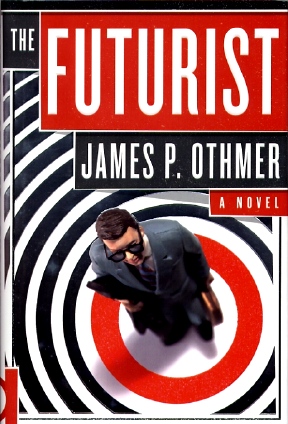
THE FUTURIST by James P. Othmer


I won't lie: I'm still not quite sure what this book is about. Would it sound condescending if I said that was a compliment? James doesn't so much construct the plot as "chew on it and spit it out," as Stewie Griffin once said. When I was done, it felt sort of like waking up in Vegas: Something about the Greelandic mafia, and a South African prostitute, and government-like agents in black suits, and surfing in Fiji. Or something. The only thing for sure after a night like this is that IT WAS A AWWWESSSOMMMMMMMEEEEEEE!


Ostensibly, the "plot," hereby properly referred to in scare quotes, centered around a futurist (someone who speculates about the future empirically, mostly for corporations interested in staying on the cutting edge) named Yates who realizes everything he says is bullshit. He then makes a speech to that effect, becomes even more famous, gets hired by two shady corporate versions of International Men of Mystery to go around the world and ask everyone why they hate America, all the while watching a space station slowly crash, then gets blackmailed by said International Men of Mystery and then saves his scheming, morally-presumptuous assistant in a fake Arab country called Ba'sar, and then...well, like Yates, I'm starting to feel like I'm bullshitting, because that's sort of all I got in the "plot" department. The main points are that Yates is a jerk who's trying to reform and, in the process of doing that, he's flying around the world gauging anti-Americanism by force of blackmail.


The rapidfire pace and surreality of the "plot" is really no accident, because Yates spends about 70% of the novel drunk on his favorite "Maker's Mark" bourbon. There's a lot of passing out in hotels from Pinot in the minibars, begging Italian antiterrorism agents (who have just accused him of being part of a mini suicide attack involving a Vespa) for aspirins, and one drunk vomit into a hooker's hooters on a business retreat for a company he doesn't work for. Oh, yeah, his girlfriend Lauren breaks up with him right at the beginning, and then he meets up with her with his new love, the unlikely philosopher in the form of a South African prostitute named Marjorie. Some of it is starting to come back to me now. I'm still not quite sure how that figures in with the quatrains of Nostradamus that end up in his email (I won't give away who sent them) or the "tulip man" who's actually a spy, but I'm sure it does somehow. Othmer's writing is like watching a child try to untangle the Christmas lights on Black Friday, but, amazingly, he does it, and the effort was worth it.


At the beginning of each chapter, we get a few snippets of bizarrity courtesy of Yates' past experiences as a futurist: "He once fired a man on Take Your Daughter to Work Day"; "A recent lecture circuit saw him speak on successive days to a leading pesticide manufacturer and the Organic Farmers of America and receive standing ovations from both"; "He once was an adviser for HeresWhatIDoMom.com, a company that made videos that explained people's nebulous jobs to their confused parents." By the third one, you get the message: Yates has sold out, is telling everyone what they want to to hear; still, the blurbs are funny and a good break from the rollercoaster "plot."


There are deeper levels, if you want to dig for them, which you probably won't have the tools to do on the Carribbean beach where you'll probably be reading this (plastic shovels and lotion will be no help). In case gas prices are keeping you on your living room couch this summer, you can notice the blatant mockery of "the media." Here's a hint for all you aspiring writers out there: Hit on the media. You can't go wrong. Give your main character two email addresses, a 3G International phone (if I have to say cell, you literally won't understand a word of this book), and a feather notebook laptop that gets satellite feeds. When Yates isn't drunk or hungover, he's firing off emails or watching his satellite feed, showing a constant video of a space hotel he endorsed in disaster, with the A-list passengers slowly dying their carbon-dioxide deaths. The media's fascination with death, etc., etc.


Obvious currents of semi-anti-Americanism run through, too. The daughter of a Greenlandic mafia member gives this little tidbit of wisdom to Yates: "They [presumably, THE US GOVERNMENT] don't want to know why. They want to know what and when and where. They want to find out who feels this way and what they are going to do--not why--and then kill them. People like that want to know everything but the why." Message (for all you gas-price hostages out there): We should be asking WHY 19 Muslims flew planes into our buildings, not when it's going to happen next.
Yeah, whatever, James.
It's not a liberal dove tome, though: Othmer actually does acknowledge that the issues are more complex than the brain-devouring meme AMERICA IS EVIL. He describes Yates' fictional encounter with a fictional character from Holland: "He loves American television, particularly The Simpsons, CSI Duluth, and the reality show It's Your Funeral! But he has a big problem with McDonald's (except the fries), the city of Cleveland, and the pop star Celine Dion."


Sure, it's funny, but that pretty much sums up much of the world's attitute toward America: In other words, conflicted. It's complicated. Most things are. Including this book's storyline. That's the fun kind of complicated, though. I started a book by Don DeLillo after this one, and, trust me, I started to appreciate the glib, smooth, and slightly snarky writing of Othmer in contrast to DeLillo's (and pretty much every "fiction" writer's) mystical high-falutin vaguaries. Just in case any DeLillo readers are skimming this, wondering if they could stomach Othmer, there is one mind-bendingly complex metaphor involving The Last Supper and Yates sticking his finger in the wound of an anti-American protestor and, like doubting Thomas, starting to understand for the first time some of the reasons (the media, outrageous wealth, etc., etc.--have I said this before?) that this kid hates him.


Some parts will have you asking, "Does this REALLY happen?" Like Yates' "gig" in the newly-created country of Ba'sar (guess who created it?). The unnamed Iraq still has massive Sunni-Shia-Jihadist civil war raging in the streets, but "the media" in collusion with unnamed Halliburtons are holding a fake "expo" at the air base to try to get the world to invest money in the quickly sinking ship. Yates is driven around under heavy convoy through the city, where they prepare "sets," setting up fake Internet cafes and hydroelectric dams and getting experts to quickly endorse them before the next bomb falls. I was tempted to be skeptical, but pulled back lest my inner critic (some version of a neo-hippie, latte-sipping, tofu-wearing California Code-Pinker) call me hopelessly American and naive. Of COURSE that happens. It's hilarious when Yates describes going onto the "expo's" website and seeing "...five pages validating the credentials of the professional security force charged with keeping the expo safe. Where one page dedicated to security measures would have given Yates faint reassurance, each successive page scares that much more the living shit out of him."


I'll bet the rights to this book are already in the screenwriting process--this "plot" is PERFECT for Hollyood. There's plenty of action, lots of government coverup conspiracies, ridiculously high-tech chrome wireless devices connected everywhere, and one big old jerk (although not, of course, a jerk that can't be redeemed by internationalist reeducation) as the main character. Watch the theaters. As for the novel, it was quick and (thank GOD) the writing was excellent. It's summer--give it a shot.


CAUTIOUSLY RECOMMENDED